Newsletter
 Events

Hijacking Search: The Story Behind 'What Is Dyslexia?'
With the voices of Jeremy Irons and Liv Tyler


There’s a moment millions of families experience every year. When a child gets diagnosed with dyslexia, a parent reaches for their phone and types four words into Google: “What is dyslexia?” And what they’re told is that dyslexia is a lifelong learning disorder. A disability. Word-blindness.
Nine in 10 say this search result leaves them feeling hopeless about their future. Not because dyslexia is hopeless. But because the front page of Google has been shaped entirely by its deficits. That’s the problem we set out to fix. And the solution isn’t a sponsored result. It’s a film.
The idea started with a constraint that looked impossible.
The Google’ Knowledge Panel, that authoritative block of information that automatically appears at the top of any search result, can’t be bought. It can’t be gamed with media spend. It’s shaped by cultural signals: critical reception, distribution reach. The kind of legitimacy that ad dollars simply cannot manufacture. Things like books, events and films. So, we stopped thinking like advertisers. We started thinking like filmmakers.
We’d needed to make something that deserved to be there, a piece of cinema complete with world-renowned actors, composers, IMDB listing, Rotten Tomatoes-approved critic reviews, press coverage and a global premiere at the BFI IMAX.
We named it “What Is Dyslexia?” after the most common search team. This ensures that when the algorithm came looking for what was most relevant and celebrated, it would find us.
The story we chose to tell is a simple one, because it needed to be. It’s a story about the very experience each and every dyslexic child is living right now.
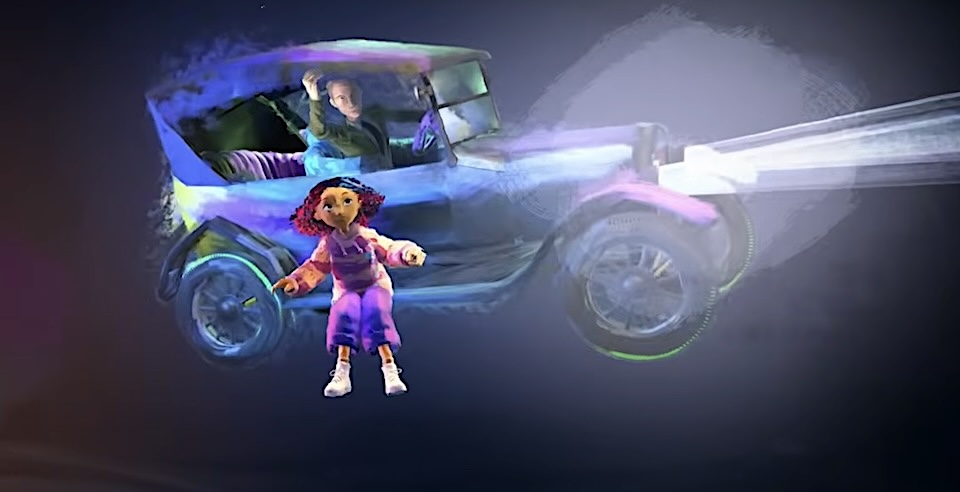
A young girl named Lola has just been told she has dyslexia. She goes online looking for answers and finds only reasons to be afraid. Then she meets a brilliant, eccentric, dyslexic inventor who takes her through history. Introducing her to Henry Ford, Muhammad Ali, visionaries from science, art and sport, all of them dyslexic, all of them extraordinary.
By the end, Lola doesn’t feel hopeless. She discovers that dyslexia is a brilliant and different way of thinking.
The audience isn’t advertising-literate industry insiders. It’s a 10-year-old sitting with their mum, trying to figure out if they fit in. Simple was the only option.
To earn the cultural weight the strategy required, every decision we made had to carry as much gravitas as possible. Starting with a cast of established actors, with voices people know and trust.
Jeremy Irons and Liv Tyler aren’t just recognizable. Both have personal connections to dyslexia, which meant they came to this project with something no casting brief can manufacture: genuine stakes. When Jeremy voices the Inventor, you’re not hearing an actor doing a job. You’re listening to a father who understands exactly what it feels like when a child is handed a label and told to make peace with it. Liv brought the same quality. Hope Day, who plays Lola, exudes a brightness and vulnerability that keeps the story grounded.
That personal investment also served a strategic purpose. Actors who believe in a project talk about it. They show up to premieres. They give interviews. All of which contributes to exactly the kind of cultural footprint a Knowledge Panel responds to. Credibility and coverage aren’t separate from the creative. They go hand in hand.
The animation style came from the same place. Art&Graft London built something that blends hand-drawn 2D with a 3D character pipeline, layered with brushwork and variable frame rates. It symbolizes what it feels like inside the mind of a dyslexic child. It’s non-linear, textured, layered, alive with detail that doesn’t always follow a straight line.
Lorne Balfe and Ted Griggs wrote the score and the film’s end-credits song, both drawing on their experiences as dyslexic thinkers. Director Kyra Bartley, working through Finch, brought it all together.
Launching at the BFI IMAX wasn’t simply an event. It was part of the strategy. A film premiering on the U.K.’s largest cinema screen gets reviewed. It earns credibility for IMDB entries, a Rotten Tomatoes page and a Letterboxd thread. Which aren’t commonly granted to short films. It builds the cultural footprint that shifts a Knowledge Panel.
What is Dyslexia? globally launched in partnership with YouTube Kids, where it sits on the homepage for the exact audience most likely to be searching for those four words for the first time.
Every decision from casting to style, distribution and even the name of the film itself was made in service of two things: to create a piece of cinema that genuinely moved people and one that the internet’s cultural infrastructure would recognise as significant.
Somewhere right now, a kid is typing What is dyslexia? into a search bar. What they find in the next ten seconds will shape how they think about themselves for years.
We want to be there when they do.