Newsletter
 Events


Hooray! Hollywood Offers a New Global Stage for Creators, Brands and Culture
The neighborhood itself is becoming a main attraction


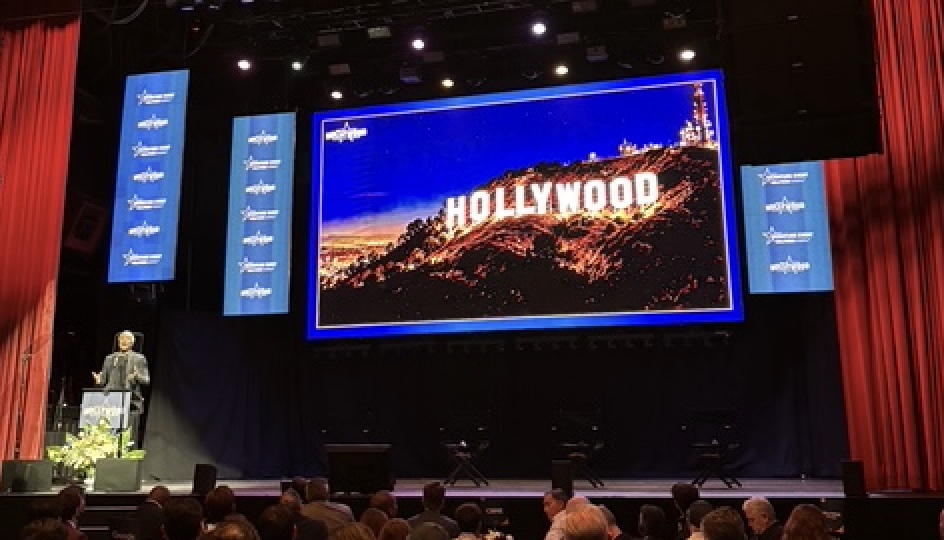
Hollywood has long been the world’s entertainment capital. Now, as creators, technology and live experiences reshape the industry, its next act may unfold beyond the screen, transforming the iconic destination into a global stage for storytelling, innovation and cultural experiences.
That vision took center stage at Hollywood Next, the Hollywood Chamber of Commerce’s Economic Development Summit on Oct. 14. Entertainment executives, developers and civic leaders examined how to transform Hollywood’s global recognition into creative and economic opportunity.
“The future of Hollywood is being decided now,” said the chamber’s president and CEO Ron Frierson. He envisions Hollywood Boulevard as the Times Square of the West Coast, “only cooler.”
With 9.8 million visits to the Entertainment District in the second quarter of 2026, including 4.2 million to the Walk of Fame area, Hollywood already commands an extraordinary audience. The challenge is turning visitors into participants.
For brands and agencies, that opens opportunities extending beyond traditional advertising into immersive entertainment, cultural programming and collaborations connecting audiences with the destination itself.
A discussion moderated by CNN’s Elex Michaelson brought together David Simon of BARDAS Investment Group, Dwaine Streater of Universal Music Group and Ryan Blank of the Hollywood Palladium. Their perspectives reflect an ecosystem evolving across production, music and live experiences.
BARDAS’ Echelon Studios Hollywood, nearing completion, is designed to combine soundstages, production facilities and creative workspaces for a new generation of storytellers. Universal Music Group has reopened Capitol Tower’s recording studios, while Live Nation’s Hollywood Palladium is expanding its guest experience through the Vinyl Room, inspired by Japanese listening lounges.
Meanwhile, Hollywood’s growing creator economy includes podcasting, digital content, branded entertainment and emerging production models. Google, a Diamond Sponsor of Hollywood Next, reinforced the role of technology and entrepreneurship in Los Angeles’ creative future. Its Studio G initiative, highlighted during the summit, connects founders and innovators across the region.
As artificial intelligence and digital platforms reshape content creation and distribution, Hollywood’s opportunity lies in bringing established entertainment companies and emerging creators into closer collaboration. Frierson also called for a more business-friendly approach to creative activations, including responsible use of the Hollywood Sign. “How can we do this responsibly? How can we get to yes?” he asked.
The 2028 Olympic and Paralympic Games offer another opportunity to put that approach into practice. Councilmember Hugo Soto-Martínez outlined plans to explore international cultural hospitality houses, viewing events, pop-ups and programming. “Give people a reason not just to come to Hollywood, but to stay in Hollywood,” he said.
For brands, those experiences could connect international audiences with local artists, venues, restaurants and businesses, creating cultural value beyond impressions and attendance.
Hollywood’s greatest advantage remains its identity as the global capital of entertainment. Its next opportunity is to make that identity tangible through collaboration, innovation and experiences that audiences cannot find anywhere else.
The next great Hollywood production may not happen on a soundstage. It may unfold across an entire neighborhood.

Michelle Edgar is a strategist, entrepreneur, civic leader and journalist. Through Edgar Talent Agency, she advises corporations, sports organizations, civic institutions, and cultural leaders on communications, partnerships, audience engagement and experiential strategy.